



Slavery and human trafficking statement
MODERN SLAVERY ACT STATEMENT
Modern Slavery and Human Trafficking Statement made on behalf of Coventry Building Society and its subsidiaries The Co-operative Bank p.l.c., Godiva Mortgages Limited and ITL Mortgages Limited (collectively the “Group”) further to section 54 of the Modern Slavery Act 2015.
ABOUT US
Coventry Building Society has been looking after our customers, members’ and their finances since 1884, and we are proud to be one of the UK’s strongest building societies. The Society is the second largest building society in the UK. As of 31st December 2025, the Group held assets in excess of £88 billion, serving over 4.5 million members and customers and employing over 5,800 people.
We trade as Coventry Building Society and as of 2025 had three trading subsidiaries, The Co-operative Bank p.l.c., Godiva Mortgages Limited and ITL Mortgages Limited. We are headquartered in Coventry, and all our customer service and head office teams are located in the UK.
On 1st January 2025, Coventry Building Society took ownership of The Co-operative Bank, bringing this 153-year-old organisation back into mutual ownership.
The period of this statement covers January to December 2025. We have published this statement for the Group.
The Group brings together two ethical and sustainable businesses. In 2023 Coventry Building Society was the first UK building society to gain B Corp status, a globally recognised standard of sustainability, and the first UK building society to be awarded the ISO 20400 sustainable procurement standard. Modern Slavery is incorporated into both of these in relation to the monitoring of supply chains and Coventry Building Society continues to maintain its B Corp status and its ISO 20400 award. The Co-operative Bank first introduced a customer-led Ethical Policy in 1992 and consults its customers regularly to help ensure its status as the original ethical bank is maintained.
Coventry Building Society and The Co-operative Bank are authorised by the Prudential Regulation Authority (PRA) and regulated by both the Financial Conduct Authority (FCA) and the PRA.
Further details about the Group’s financial performance and strategy can be found in the 2025 Annual Report and Accounts, which includes the results of the subsidiaries.
OUR APPROACH
The Group have controls designed for zero tolerance to slavery and human trafficking both within its own operations and its supply chains. The Group is committed to taking all reasonable steps which seek to ensure that there is no modern slavery or human trafficking in supply chains or in any part of our business.
OUR SUPPLY CHAINS
The Group does not manufacture or supply any goods. The Group’s suppliers support our functions and the provision of financial services to customers.
Suppliers are subject to onboarding checks, continuous monitoring plus enhanced due diligence for higher-risk suppliers and periodic reassessment before entering into a contract.
We have internal procedures to ensure adequate procurement pricing, prompt payment and good planning to ensure that all activities carried out by the Group are in keeping with contractual obligations.
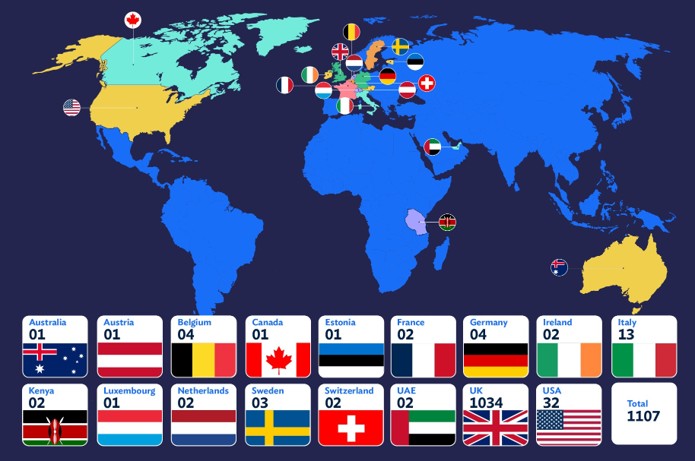
All the Group’s call and operations centres are operated by us in the UK and the majority of the Group’s suppliers are also UK based. Any supplier activity that takes place outside of the UK is expected to comply with all aspects of the Supplier Code of Conduct and is subject to due diligence checks.
Because of the nature of our business and supply chains, following careful assessment of key inherent risks, via due diligence and continuous monitoring assessment across categories including IT/outsourcing, cleaning, security, construction, contact centres we consider the risk of the presence of slavery or human trafficking in its supply chains to be low. However, we are not complacent in relation to these issues.
Geographical locations of our suppliers which provide primary service are outlined in the table below.
| UK | EU | USA | RoW |
|---|---|---|---|
| 94% | 3% | 3% | <1% |
Our Supplier Code of Conduct sets out expectations of suppliers and is based upon the principles detailed in the UN Global Compact. Suppliers are subject to due diligence and continuous monitoring to cover these requirements. Amongst other things, these state:
No child labour – There shall be no recruitment of child labour. We require our suppliers to recruit and employ any workers in compliance with applicable law. Persons aged under 18 shall not be employed at night or in hazardous conditions.
Employment is freely chosen – All work must be conducted on a voluntary basis and not under threat of any penalty or sanctions. There shall be no forced, bonded or involuntary prison labour. Suppliers should not utilise forced labour, i.e. all work or service which is exacted from any person under the threat of any penalty and for which the said person has not offered themselves voluntarily. Workers must be free to leave their employer after reasonable notice.
Modern slavery – Suppliers are required to comply with all applicable anti-slavery and human trafficking laws, statutes, regulations and codes from time to time in force; and required not to engage in any activity, practice or conduct that would constitute an offence under sections 1, 2 or 4 of the UK’s Modern Slavery Act 2015, as amended, or other laws or regulations in effect. Suppliers are required to include in their contracts anti-slavery and human trafficking provisions that are at least as onerous as those set out in this Code of Conduct and required to implement due diligence practices to support this. Suppliers are obligated to notify the Group as soon as they become aware of any actual or suspected slavery or human trafficking in any supply chain connected to the Group.
The Group deems its approach to Procurement and Supplier Relationship Management as an effective measure to enforce a zero-tolerance approach to slavery and human trafficking. Suppliers are required to confirm their agreement and adherence to the Supplier Code of Conduct. Supplier due diligence, assurance reviews and continuous monitoring of adverse media is in place to enable ongoing assessment of suppliers.
OTHER AREAS RELATING TO MODERN SLAVERY AND HUMAN TRAFFICKING
The Group has a robust framework that prohibits modern slavery and human trafficking.
A whistleblowing process operates across the Group for customers, suppliers and colleagues whereby concerns can be raised and escalated as applicable.
We continue to review relevant policies to ensure they comply with legislation and support their spirit. The purpose of our policies is to prevent, identify and address incidents of modern slavery and human trafficking as and when they arise.
COLLEAGUES
We expect all colleagues to be treated fairly, with respect and dignity. Our Employee Code of Conduct applies to all colleagues (which includes employees, contingent workers and contractors). It sets out our values and our expectations of colleagues, and it includes a clear commitment to human rights.
Employees are requested to attest to the Code of Conduct on an annual basis which incorporates confirming adherence to all required policies and processes.
CUSTOMERS
The Group recognise that some customers may be in vulnerable circumstances that increase their risk of harm or exploitation, including situations involving coercion, abuse or control. Vulnerability may arise from personal, financial or situational factors, may be temporary or enduring and may not always be visible.
As a financial services provider, the Group recognise that modern slavery and human trafficking risks can arise through the misuse of financial services, including where customers are subject to coercion, control or financial or economic abuse. Customer safeguarding is therefore a core element of the Group’s approach to preventing modern slavery and human trafficking, alongside supply chain controls.
Potential indicators of exploitation or coercion may arise through customer interactions, account activity or where there is evidence of undue influence by third parties. Colleagues are supported to exercise judgement and to raise concerns through established escalation routes where indicators of harm are identified.
Where concerns are identified, cases are reviewed by relevant specialists who provide appropriate oversight, challenge and input. Where deemed necessary, escalation takes place to established governance forums. Our response is focused on safeguarding and reducing the risk of harm, including further review, additional support or engagement with relevant authorities where appropriate.
During the reporting period, the Group enhanced its approach to supporting vulnerable customers and addressing risks associated with economic abuse and coercive control. This included strengthening internal oversight of vulnerability and safeguarding, enabling alternative routes for customers to share concerns where they may not feel safe or comfortable in doing so and progressing improvements to customer interaction and proportionate escalation where needed.
Our branch colleagues, as well as all other customer-facing roles, have a clear escalation path to follow through internal reporting when unusual customer behaviour is observed or identified. Our Economic Crime team investigate potential Modern Slavery and/or Human Trafficking activity, and we will exit relationships with suspected perpetrators where indicators cannot be discounted. We collaborate with external agencies including law enforcement to help identify and mitigate against modern slavery and human trafficking.
OUR WORKPLACE
All colleagues are recruited using legally compliant processes and where such colleagues must also meet the 1999 Immigration Act and 2006 Immigration, Asylum and Nationality Act requirements. Relevant background screening checks are performed to monitor adherence to this. We do not have any reliance on seasonal workers and much of our contractor and contingent worker population is for professional and senior professional/technical roles.
Support mechanisms are in place for colleagues should any personal support be required linked to modern slavery or human trafficking concerns. This includes a 24 hour, 7 days a week employee assistance helpline and wellbeing programme, along with access to a confidential whistleblowing channel to report any concerns anonymously.
We have harmonised employee terms and conditions across the Group, which enables us to treat colleagues consistently and in a way which aligns to our Group culture.
RECRUITMENT
We are committed to maintaining a sustainable pipeline of diverse talent against our competencies for success.
We do this by having clear frameworks for the recruitment team and hiring leaders to ensure we always behave ethically and manage risk.
We do not provide any zero-hour contracts. All colleagues have a guaranteed number of hours. How we manage recruitment:
- Fixed term and permanent vacancies are managed by our in-house and on-site outsourced teams, as is contingent worker recruitment.
- Our Background Screening Policy details the level of checks that we will complete as part of the on-boarding process. This includes employment referencing, a criminal record check, fraud checks and checks in relation to financial sanctions.
- We use a third-party supplier to conduct employment screening checks before the candidate’s start date, to ensure we actively check their right to work in the UK.
- All candidates must pass the screening checks according to our policy before they can join the Group.
TRAINING
Colleagues are provided with a curriculum of training that’s relevant to them and their role. Guidance is available to all colleagues via the Group intranet, and this is regularly updated with content and applicable news stories.
Focused training workshops on definitions and red flag indicators have been delivered to Financial Crime Investigators and Customer Service Colleagues. Awareness sessions were run through Anti-Slavery week (13 to 19 October 2025).
In addition, the Group utilise a financial services industry digital training tool provided via the UK Modern Slavery Training Delivery Group, the UK Independent Anti-Slavery Commissioner, and Themis. This training supports the identification of signs of modern slavery. The Group also ensures that our management teams have additional support which includes guidance to make sure the recruitment process is consistent and our approach to managing suppliers is effective.
CONTROLS AND OVERSIGHT THROUGHOUT 2025
The Group operates a programme of supplier relationship management and audit activities.
This programme is also subject to regular reviews by our internal audit function. Where any concerns arise, a full assessment would be made, and appropriate actions taken to address those concerns.
We use tooling to undertake supplier due diligence and ongoing identification of adverse media. In addition, supplier governance meetings are periodically held. No concerns or issues have been identified through our monitoring activities in relation to modern slavery in the past 12 months. In addition, no concerns have been raised from our suppliers or our whistleblowing process in 2025.
We conduct ongoing customer monitoring and screening, both at onboarding stage and on an ongoing basis, which supports the identification, reporting and escalation of modern slavery and human trafficking. This activity aligns to vulnerable customer reporting and escalation process.
Referral figures and outcomes are subject to enhanced monitoring and oversight with particular focus given to safeguarding and mitigating ongoing risk.
These activities align with the Group’s vulnerable customer reporting and escalation processes. Oversight arrangements monitor progress, consider emerging themes and inform the prioritisation and enhancement of controls, supporting a consistent approach to identifying and addressing vulnerability related risks across the Group.
NEXT STEPS
The Group regularly reviews its approach to tackling modern slavery and human trafficking. This helps us engage with suppliers to identify any ethical trading issues and incidents of slavery or human trafficking and take appropriate action.
The Group has formally committed to becoming a signatory to the UK Finance Financial Abuse Code with adoption planned from November 2026. This reinforces the Group’s approach to supporting customers experiencing economic abuse and embedding consistent, empathetic and effective responses over time.
Looking ahead, the Group is exploring digital self-disclosure and data capture capabilities to enable customers to disclose vulnerabilities and support needs, supporting safer customer interaction and proportionate escalation where needed.
From 2026, specific content in relation to Modern Slavery and Human Trafficking is being rolled out to all colleagues as part of our Anti Money Laundering training. Anti-Slavery week in October will also see some focused content.
We will also be working with Stop the Traffik a UK-based, international non-profit organisation to support in strengthening our intelligence data and information regarding Human Trafficking.
These actions reflect the Group’s commitment to continuous improvement and to embedding safeguarding considerations into the design and delivery of services.
Note: Following the acquisition the Group are conducting an integration programme therefore there may be variances in operations of controls and processes whilst this activity completes.
This statement is made pursuant to section 54(1) of the Modern Slavery Act 2015 and constitutes the modern slavery and human trafficking statement for Coventry Building Society Group for the financial year ending 31 December 2025.
Thank you for taking the time to read the Group’s statement.
This statement has been approved by the Board of Directors of each of Coventry Building Society, The Co-operative Bank p.l.c., Godiva Mortgages Limited and ITL Mortgages Limited on 3 July 2026. For and on behalf of:
Coventry Building Society
The Co-operative Bank p.l.c
Godiva Mortgages Limited
ITL Mortgages Limited
Download slavery and human trafficking statement 2025 (PDF 417KB)
Archive
Download slavery and human trafficking statement 2024 (PDF 532KB)
Download slavery and human trafficking statement 2023 (PDF 524.9KB)
Download slavery and human trafficking statement 2022 PDF (502.3KB)
Download slavery and human trafficking statement 2021 PDF (2.3MB)
Download slavery and human trafficking statement 2020 PDF (364KB)
Download slavery and human trafficking statement 2019 PDF (3.85MB)
Download slavery and human trafficking statement 2018 PDF (1.44MB)
Download slavery and human trafficking statement 2017 PDF (1MB)
Download slavery and human trafficking statement 2016 PDF (803KB)